Jun 23, 2026
By Rick McNary
Imagine being stopped at a railroad crossing and counting 108 railcars filled with sorghum grown in Kansas slowly rumbling by, headed to hungry people around the world through a Kansas-based program called Food for Peace. Thanks to the National Sorghum Producers (NSP) and their chairwoman, Amy France of Marienthal, those 108 railcars held 400,000 bushels of Kansas-raised sorghum headed to various destinations around the world where people suffer from acute hunger.
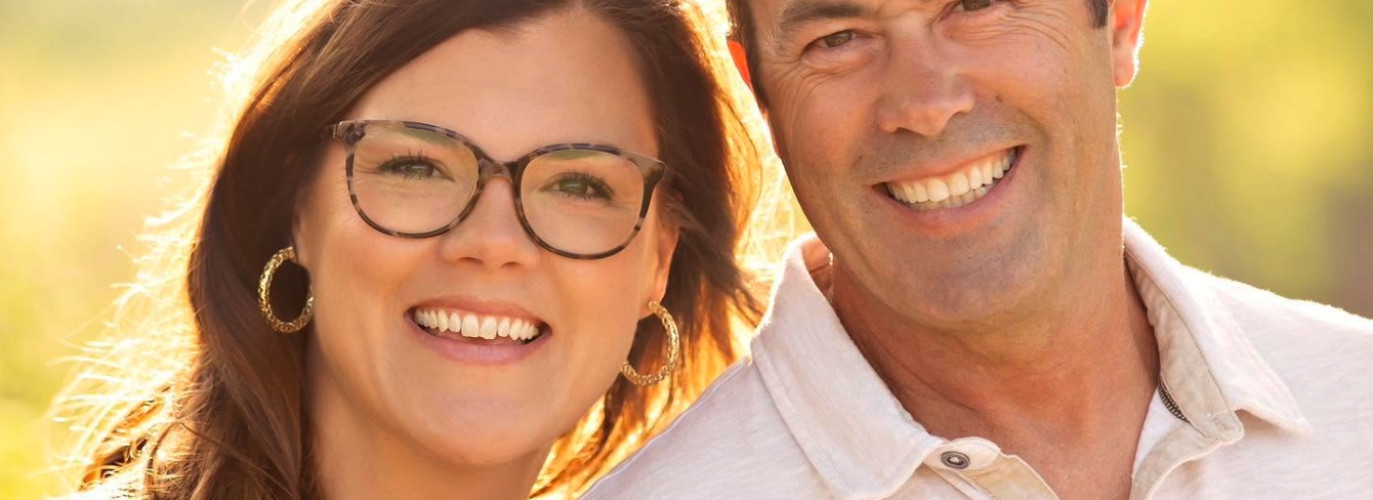
I have known Amy and her husband, Clint, for several years having first met them when she was the chair of the Kansas Farm Bureau’s Young Farmers and Ranchers (YF&R) Committee. Although Clint is a third-generation farmer, Amy did not grow up on a farm but married into the lifestyle.
“Agriculture is not something I was born into,” Amy says. “Therefore, it makes it easy to tout what our family does. I can say, ‘my husband and father-in-law and mother-in-law are amazing people who do amazing things and I get to be a part of it.’”
When the National Sorghum Producers approached Amy about becoming the chairwoman, at first, she had doubts.
“I have been blessed with mentors along the way whom I trust,” Amy says. “I called Kent Winters and he said, ‘Why wouldn’t you? This is what you’ve been training for.’”
Amy credits her leadership development through several Kansas Farm Bureau opportunities such as being a county coordinator, attending various leadership offerings and then serving with Clint as leaders of YF&R.
“I then was able to go through American Farm Bureau’s Partners in Advocacy (PAL) program,” she says. “It is a two-year program to take farmers and ranchers from the ages of 30-45 and provide them with next-level leadership training. They did a great job of preparing me for the hurdles I had yet to encounter. It was as Kent said; I had been training for the role with NSP for quite some time.”
“One of my favorite parts of the role is educating people about the benefits of sorghum,” she says. “Sorghum, also known as milo, is a water-sipping crop because it uses less water to produce in comparison to wheat and corn. For those of us who live in western Kansas, water conservation is extremely important and we’re seeing more farmers planting sorghum, especially with concerns about the strain on the Ogallala Aquifer.”
Sorghum, which is native to Africa, is considered an ancient grain. While it’s often used for animal feed and biofuel, it is becoming increasingly popular for human consumption because it is considered a super grain containing higher concentrations of protein, fiber, vitamins and minerals than standard refined grains.
The United States is the largest producer of sorghum with Kansas leading the way. In 2025, Kansas harvested 252 million bushels; Texas harvested 100.7 million bushels; Colorado harvested 26 million and Oklahoma harvested 23.49 million.
One strong market for U.S. sorghum is China for use in baijiu, their most-consumed alcoholic beverage. Although China can import sorghum from other countries, it prefers U.S. sorghum because of its high quality.
The recent announcement that 108 railroad cars containing 400,000 bushels of sorghum were leaving Kansas for various parts of the world to feed the hungry holds a special meaning for people in Kansas agriculture as well as those who have worked in the international hunger space because of the origins of the Food for Peace (FFP) Program.
In 1954, the Cheyenne County Farm Bureau in the northwest corner of Kansas came up with the idea of approaching the federal government to purchase excess crops from farmers and send it around the world to help with severe malnutrition and hunger. President Dwight Eisenhower, a Kansas native, signed PL-480 into law in 1954. Later, in 1961, President John Kennedy rebranded it into “Food for Peace.”
For those of us, like me, who are both native Kansans and people who have been involved in international hunger relief, the FFP program, which is the most enduring and scandal-free humanitarian aid program in existence, we are proud of the fact that it originated in Kansas
In 2012, I saw FFP in action when I was in the Dedaab Refugee camp about 10 miles from the Somalia border. At that time, more than 750,000 refugees lived in the camp, and I traveled there as a guest of Ambassador Tony Hall and the World Food Program. While there, I saw bags of rice being unloaded, which had this message stamped on each bag: “This food is the gift of the American people.”
As I got to know Amy through the years, she, Clint and their family joined me in numerous meal-packaging events with FFA and YF&R so I know hunger is an issue they care deeply about.
While Shop Kansas Farms focuses on local foods and farmers, the roots of SKF’s origins lay with my experience in international hunger relief because as I learned, Kansas farmers truly do feed the world.